Demolition debris is heavier and more tightly regulated than the waste from a normal remodel, so a demolition dumpster rental in Canton, Ohio needs different planning than a standard cleanout. The right container size depends on weight as much as volume, pickup timing has to keep pace with a fast-moving crew, and a few common demo materials cannot go in the box at all.
Here is what matters most on a Greater Canton demolition: getting the size right for heavy debris, separating material to control cost, keeping swaps on schedule, and knowing what cannot go in the container.
Key Takeaways
- Demolition debris is dense, so a dumpster often hits its weight limit before it looks full. Plan around tonnage, not just yardage.
- A 30-yard dumpster usually handles the demo of one or two rooms. A 40-yard fits larger structural jobs.
- Separating concrete and metal into their own containers can lower disposal cost, and clean concrete is often recycled into aggregate.
- On a demolition timeline, a full container with no swap stops the whole crew, which makes fast pickup more valuable than on a slower residential job.
- Asbestos, tires, paints, motor oils, batteries, and fuels cannot go in a demolition dumpster.
Why Demolition Debris Is Different From Regular Construction Waste
The waste from a demolition is not like a garage cleanout. It is dense. Concrete, brick, tile, plaster, and metal weigh far more per cubic yard than drywall, cabinets, or old furniture. That difference changes everything about how you plan the rental.
Demolition also generates the bulk of heavy construction waste nationally. According to the U.S. Environmental Protection Agency, demolition accounts for more than 90 percent of all construction and demolition debris, and the heaviest materials in that stream are concrete, brick, and metal. Those are exactly the materials that fill a job site during a tear-down.
Here is the practical problem. A container has both a volume limit and a weight limit, and with demolition debris you usually reach the weight limit first. A 40-yard box loaded with concrete can pass its tonnage cap while it still looks half empty. If you size the rental by how big the pile looks instead of how heavy it is, you risk a rejected pickup or a surprise overage charge. This is the single most important thing to get right on a demo job.
What Size Dumpster You Need for a Demolition Job
Sizing a demolition dumpster starts with the scope of the tear-down, then gets adjusted for weight. As a general guide, a 30-yard container is usually enough for demolishing one or two rooms, and a 40-yard is the better call for larger structural work or a whole-building job.
It helps to think in pickup-truck loads:
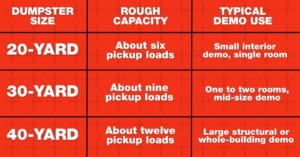
The catch is weight. For dense material like concrete, brick, or tile, a smaller container that stays under the weight cap can beat one giant box that gets rejected for being too heavy. When your debris is mostly heavy material, ask about tonnage limits before you book, not after. If you want a deeper look at matching a box to heavy jobsite waste, our guide to choosing a dumpster for construction debris walks through it. When in doubt, call and describe the job. The team at redbox+ Dumpsters of Greater Canton would rather help you size it right than watch you pay for a second haul.
Separating Heavy Debris: Concrete, Metal, and What Gets Recycled
On larger demolitions, one container for everything is not always the smart move. Separating debris by type can lower your total cost and keep the job cleaner.
- Concrete and masonry. Clean concrete is heavy, but it is also recyclable. It is often ground down and reused as aggregate for fill, subbase, or driveway bedding. A concrete-only container keeps that material out of the general landfill stream.
- Metal and rebar. Steel, rebar, and other metals are valuable and recyclable. Pulling them into their own pile keeps them out of the weight-capped mixed container.
- General landfill waste. Wood, drywall, insulation, and other mixed debris go in the standard roll-off.
Separating material this way does two things. It helps you avoid overage fees by keeping the heaviest material in a container sized for its weight, and it routes recyclable concrete and metal toward reuse instead of the landfill. In a multi-container demo, redbox+ can stage more than one box on-site and haul each as it fills.
Why On-Time Pickup Matters More on a Demolition Timeline
On a slow residential project, a late swap is an annoyance. On a demolition, it is a work stoppage. When the container is full and the next one has not arrived, the crew has nowhere to put debris, and a paid crew standing around is money leaving the job.
That is why turnaround matters more here than almost anywhere else. redbox+ Dumpsters of Greater Canton offers 24-hour turnaround on most delivery, service, and pickup requests, and will empty or swap a container as often as the job needs. The goal is simple: the box is never the thing that slows you down. For more on how debris flow affects a build, see our breakdown of jobsite downtime from poor debris management.
For crews on a multi-week demo, there is one more time-saver worth knowing about. The Elite dumpster and restroom combo is a patented unit that pairs a roll-off dumpster with an on-site portable toilet in a single drop. Your crew gets waste disposal and a restroom from one call, one delivery, and one invoice, and the restroom is cleaned on site without leaving the job. Two services, one call. It removes a second vendor from your schedule on the exact kind of long job where that coordination usually eats time.
What You Cannot Put in a Demolition Dumpster

Some demolition materials are prohibited, and one matters more than the rest in Greater Canton: asbestos. The region has a lot of older housing and commercial stock across Canton, North Canton, Massillon, and Jackson Township, and structures built before the 1980s can contain asbestos in insulation, flooring, siding, and pipe wrap. Asbestos cannot go in a dumpster. Federal rules require a thorough inspection before demolition when asbestos may be present, and any asbestos found has to be removed by a licensed abatement contractor first. Do not assume an old building is clear.
Beyond asbestos, these items are not allowed in any roll-off container:
- Tires
- Paints and stains
- Motor oils and other automotive fluids
- Batteries
- Fuels and other flammable liquids
One more planning note. If the container has to sit on a street or other public property rather than the job site, your municipality may require a permit. Placement on private property, like a driveway or the site itself, generally does not. When in doubt, ask before delivery so a permit issue does not stall the start.
FAQ
What size dumpster do I need for a demolition project?
For most demolition work, a 30-yard dumpster handles the tear-down of one or two rooms, and a 40-yard fits larger structural or whole-building jobs. A 20-yard suits a small single-room demo. Because demolition debris is heavy, weight matters as much as size. If your material is mostly concrete or brick, ask about the tonnage limit before booking so you do not exceed it.
How much does a demolition dumpster rental cost in Canton, Ohio?
Cost depends on three things: the container size, the weight of the debris, and how long you keep it. Heavy demolition material like concrete can affect price because most rentals include a set tonnage allowance, with extra weight billed on top. The best way to get an accurate number is to describe your job and get a clear, upfront quote with no hidden fees before you book.
Can you put concrete in a dumpster?
Yes, but concrete is heavy and should be planned for carefully. Because it adds weight fast, many demolition jobs use a separate concrete-only container so the mixed-debris box does not exceed its weight limit. Clean concrete is also recyclable and is often ground down and reused as aggregate. Ask your provider how they handle concrete so you avoid overage charges and route it toward reuse.
Do I need a permit for a demolition dumpster in Canton?
Usually not, if the dumpster sits on your private property or the job site, such as a driveway. A permit is more likely if the container has to be placed on a street or other public right-of-way, since local municipalities in Greater Canton may require one. Check with your provider or the city before delivery so a placement issue does not delay your start date.
What materials cannot go in a demolition dumpster?
Asbestos is the most important prohibited material on demolition jobs, and older Greater Canton buildings can contain it, so test before you tear down. Other banned items include tires, paints, motor oils, batteries, and fuels or flammable liquids. These have to be disposed of through the proper channels. If you are unsure about a specific material, call and ask before it goes in the container.
Ready to Plan Your Demolition Rental
A demolition dumpster rental works best when the container is sized for weight, the swaps keep pace with the crew, and the wrong materials stay out of the box. That is the whole job of a good local provider, and it is what redbox+ Dumpsters of Greater Canton does on every demo, with 24-hour turnaround, transparent pricing, and drivers who place the container with care.
Tell us about your tear-down and we will help you get it right. Call or text 330-366-8869, or contact our Greater Canton team to get started. When it comes to convenience and reliability, we deliver.